
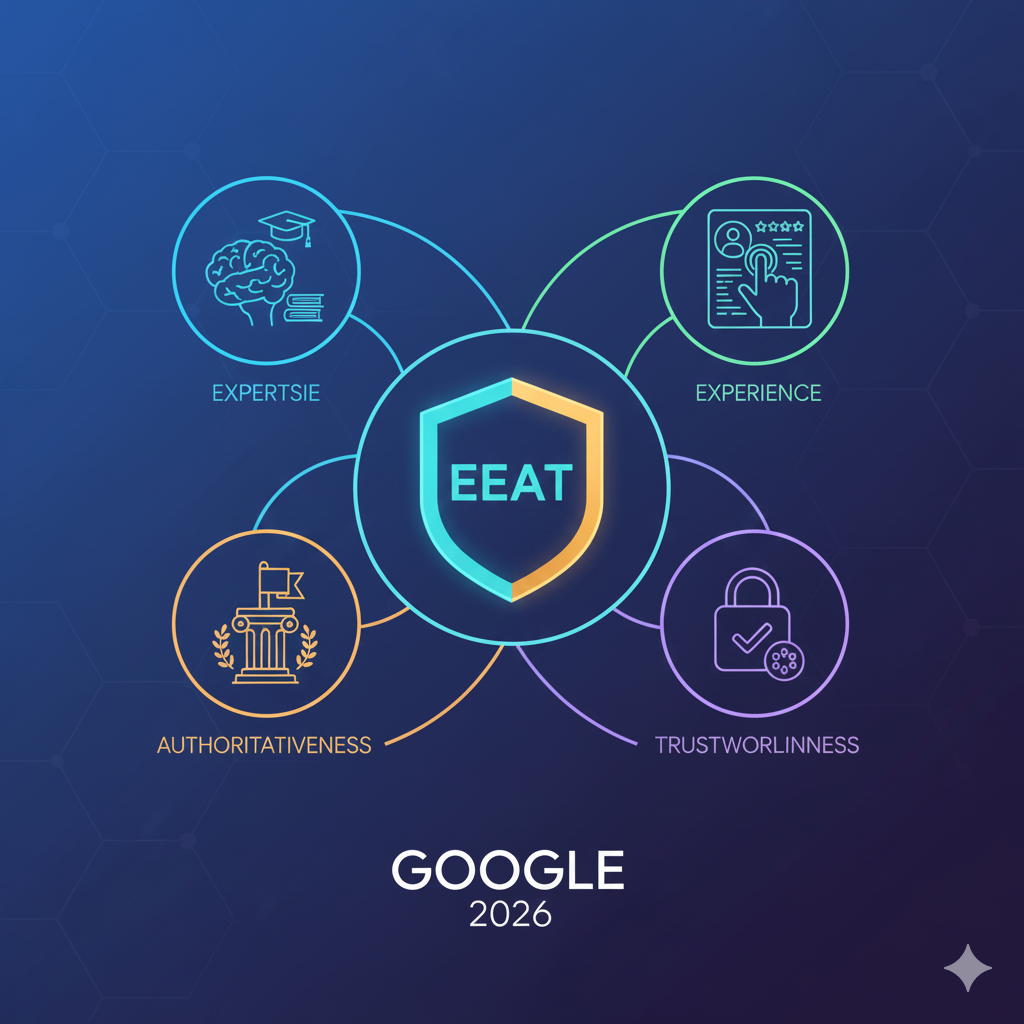
In 2026, beginners can build EEAT by proving real experience, creating niche-focused content, showing author identity, adding trust elements, leveraging micro-expertise, building topic authority, collecting small credibility signals, and consistently publishing original insights. Google rewards real creators, not faceless websites.
If you’re starting a blog, YouTube channel, service website, or personal brand in 2026, you’ve probably heard this everywhere:
“Google only ranks sites with strong EEAT.”
And if you’re new, you probably feel the pressure:
- “How do I build authority when I’m not famous?”
- “Do I need years of experience?”
- “Do I need certificates?”
- “Do I need backlinks from big sites?”
Let me tell you something honestly from someone who writes daily, analyses SERPs, and sees ranking patterns in real time:
**Beginners CAN build EEAT. And you don’t need fancy achievements.
You just need to show you’re a real human with real experiences and real value.**
That’s what Google rewards now.
Let’s dive deep into the 10 most practical ways beginners can build authority in 2026.
1. Choose One Clear Niche (Don’t Spread Yourself Thin)
This is the most important step.
Google ranks people who show topic depth, not people who write about everything.
In 2026, topical authority is stronger than ever.
If you’re a beginner, choose:
- One niche
- One audience
- One category of problems
Examples:
- “Freelancing tips for beginners”
- “Budget fitness for students”
- “Affordable travel in India”
- “Content writing for small creators”
- “Shopify SEO for new store owners”
Don’t choose a niche that’s too wide like:
- Lifestyle
- Business
- Personal development
- Technology
Be specific.
Reason:
When Google sees all your content focused on one topic, your authority builds faster.
2. Publish Content From Real Experience (Even Small Ones Count)
People assume “experience” means awards or 10 years in an industry.
Not true.
Even small experiences count as experience.
For example:
- “I tried this strategy for 7 days…”
- “Here’s what I learned after writing 10 blogs…”
- “I tested this app for a week…”
- “This is why my first month in freelancing failed…”
This type of content does two things:
✔ Shows Google you are not AI
✔ Shows readers you’ve actually lived what you’re talking about
Google’s EEAT heavily prioritises experience-based content in 2026.
So, instead of:
“How to save money”
write
“How I saved ₹22,000 a month as a college student: My honest breakdown”
This shift changes everything.
3. Build a Strong Author Profile (Google Ranks Humans, Not Ghosts)
In 2026, anonymous authors = low trust.
Google checks:
- Your name
- Your online presence
- Your social profiles
- Your writing history
- Your credibility signals
So do this:
✔ Add an author bio on every blog
✔ Add a photo of yourself
✔ Add a link to your LinkedIn
✔ Add a “My Story” page
✔ Add your experience (even if small)
✔ Add your niche expertise
✔ Add why people should trust you
People relate to people not “Team XYZ.”
4. Show Transparency and Real Identity (This Builds TRUST Quickly)
One of the fastest ways to build EEAT is to be transparent.
Share things such as:
- Your journey
- Your mistakes
- Your wins
- Your learning
- Your goals in the niche
Readers connect emotionally with authenticity, and Google sees that through:
- Engagement
- Time-on-page
- Returning visitors
Your personality becomes your authority.
5. Create High-Depth Content (Don’t Write Surface-Level Blogs)
Most blogs online today are:
- Generic
- AI-written
- Repetitive
- Predictable
- Too shallow
Google knows it. Readers know it. You know it.
So if you want authority:
- Go deep
- Add insights
- Add your analysis
- Share your personal viewpoint
- Add frameworks
- Add examples
Depth signals expertise.
For example:
Instead of “10 SEO tips,” write:
“My step-by-step SEO strategy for ranking a new website in 2026 (with real examples)”
That’s depth.
That’s EEAT.
6. Use Original Examples, Screenshots, Proof, and Data
Beginners underestimate how important “originality signals” are.
Google looks for:
✔ Screenshots
✔ Real photos
✔ Your own diagrams
✔ Personal stats
✔ Real case studies
✔ Step-by-step results
These are “unfakeable,” so Google sees you as a real human with real experience.
When I write blogs, I always try to include:
- My observations
- My own frameworks
- My own lessons
- My personal breakdown
This automatically boosts EEAT.
7. Build Micro-Credentials (Easily Available for Beginners)
You don’t need big degrees.
You can add:
- Free certifications (Google, HubSpot, Meta)
- Testimonials
- Small achievements
- Client feedback
- Portfolio links
- Guest contributions
- Case studies (even small)
These create credibility signals that Google tracks.
Even:
✔ “My first 5 clients”
✔ “My first 10 sales”
✔ “My first ₹10,000 from blogging”
…can become authority markers.
8. Get Mentioned or Linked on Other Platforms (Even Small Platforms Count)
You don’t need Forbes.
You don’t need big newspapers.
Small mentions matter too.
You can:
- Write guest posts
- Share insights on LinkedIn
- Comment on niche posts
- Collaborate on small blogs
- Answer Quora questions
- Join niche communities
- Do podcast swaps
- Get shoutouts
Google sees ANY third-party visibility as an “authority signal.”
Even a small feature like:
“Featured on XYZ blog”
boosts trust.
9. Build Trust With Clean, Human-Friendly Website Signals
Google’s EEAT “trust” category checks technical and user experience signals:
Add these to your site:
✔ Clear About page
✔ Clear Contact page
✔ Social links
✔ Privacy Policy
✔ Terms & Conditions
✔ Easy navigation
✔ No clickbait
✔ No ads exploding everywhere
✔ HTTPS security
✔ Real author identity
These “small trust signals” matter more in 2026 than most people realise.
10. Publish Consistently (Consistency Builds Authority Faster Than Expertise)
Consistency is the biggest underestimated EEAT factor.
Because:
- The more content you publish → the more signals Google gets
- The longer you stay in one niche → the more authority you build
- The more your audience returns → the more trust you gain
You don’t need to publish daily.
Even:
- 1 blog per week
- 4 blogs per month
…can build strong authority in 2026 if your content is:
✔ Helpful
✔ Experience-based
✔ Well-researched
✔ Human-written
✔ Deep and original
I personally see consistent creators outrank “experts” all the time.
Final Verdict: Can Beginners Really Build EEAT in 2026?
Absolutely yes.
And this is the biggest opportunity of this decade.
Because Google is tired of:
- AI spam
- Generic blogs
- Faceless websites
And wants:
- Real humans
- Real experiences
- Real expertise
- Real authority
If you follow these 10 steps:
✔ Stay in one niche
✔ Add your experience
✔ Build your author presence
✔ Add depth and originality
✔ Use proof and examples
✔ Publish consistently
…you can build strong EEAT, even as a complete beginner.
And honestly?
2026 is the BEST year to build an online authority brand because most people will rely entirely on AI, and lose.
Human-led content is the new power.